Hey there, fellow entrepreneur! 🚀 Let’s dive into a topic that’s often overlooked but absolutely crucial for the survival of your small business—insurance. Whether you’re running a cozy café or a buzzing tech startup, understanding the role of insurance can be the game-changer you didn’t know you needed.
From shielding you against unexpected setbacks to ensuring your business’s long-term sustainability, insurance is more than just a safety net—it’s your ticket to peace of mind. And trust me, once you’ve wrapped your head around the essentials, you’ll wonder how you ever managed without it. So, let’s break it down, Backlinko style, and arm you with all the knowledge you need to make informed decisions!
Importance of Small Business Insurance
Did you know that 40% of small businesses never reopen after a disaster? That’s a hard pill to swallow.
Small business insurance isn’t just a safety net—it’s a lifeline. You and I both know that running a business is risky. From natural disasters to lawsuits, the threats are endless. But here’s the deal: with the right insurance, you’re not just protected; you’re empowered to take bold steps forward.
The Role of Insurance in Protecting Small Businesses
Insurance acts like a guardian angel for your business. It protects against unexpected events that could otherwise cripple your operations. Think of it as a shield that safeguards your assets, employees, and even your reputation. Unfortunately, too many entrepreneurs overlook this crucial aspect until it’s too late.
Pro Tip: Evaluate your specific risks annually to ensure your policy covers new vulnerabilities.
Common Risks Faced by Small Businesses
Let’s talk specifics. Small businesses face a myriad of risks daily. From property damage to cyber threats, the list is exhaustive. Imagine a fire breaking out in your office or a data breach leaking sensitive customer information. In these cases, business insurance is your first line of defense.
- Property Damage: Protects physical assets like buildings and equipment.
- Liability Claims: Covers legal fees and settlements from lawsuits.
- Cybersecurity Breaches: Safeguards against data loss and hacking incidents.
Economic Impact on Small Business Sustainability
Insurance doesn’t just cover costs—it can actually ensure your business’s longevity. By mitigating financial losses, it helps you maintain cash flow and business continuity. Think about it: without a safety net, a single lawsuit could wipe out your savings. But with insurance, you’re prepared to face the unexpected and keep your business thriving.
In essence, insurance is an investment in your business’s future, one that pays off by providing peace of mind and financial stability.
Types of Small Business Insurance
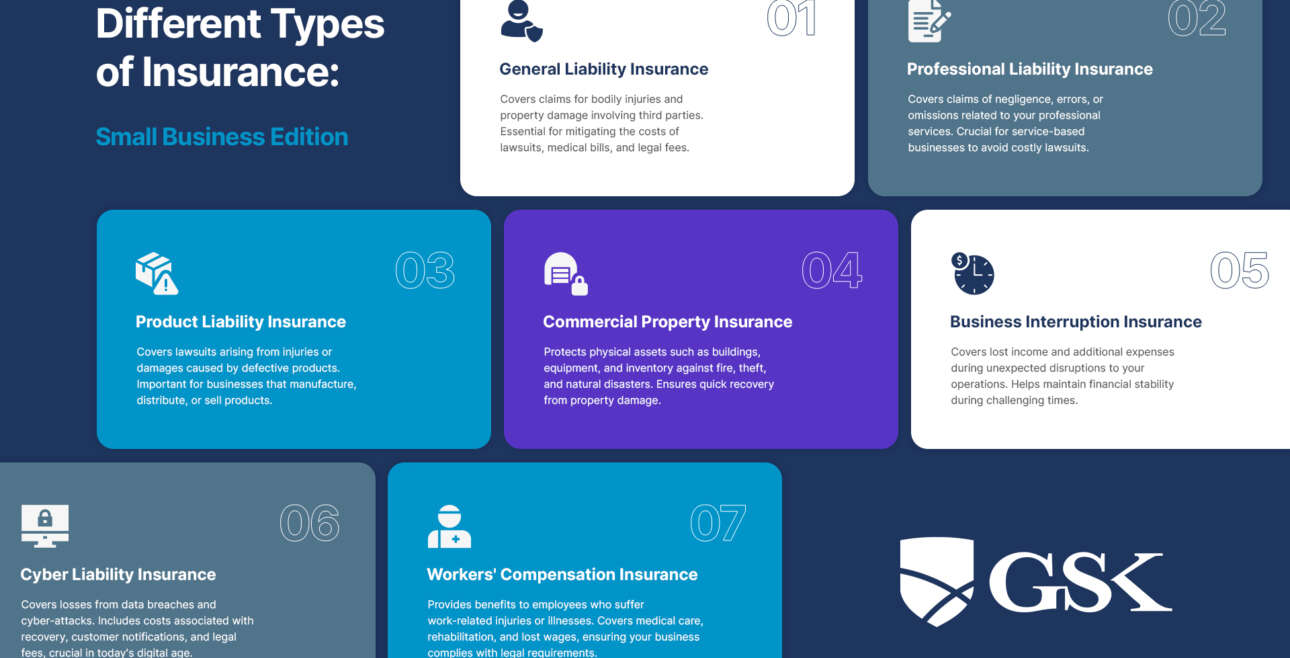
Did you know that 40% of small businesses have no insurance at all? That’s a huge risk. And I’m not talking about minor risks. I’m talking about risks that can shut down your business overnight.
Here’s the deal: there are several types of insurance that can shield your business from going under. Each type covers different aspects, from property damage to liability claims. Let’s dive into the specific types you should consider for your business.
General Liability Insurance
General Liability Insurance is like a security blanket for your business. It covers third-party claims of bodily injury, property damage, and advertising injury. For instance, if a customer slips and falls in your store, this insurance has you covered.
| Type | Coverage | Typical Cost |
|---|---|---|
| General Liability | Third-party injury, property damage | $400 – $600 annually |
Pro Tip: Combine General Liability with a Business Owner’s Policy (BOP) for bundled savings and broader coverage.
Property Insurance
If your business owns a building or expensive equipment, Property Insurance is essential. It covers damage from fire, theft, and storms. So if a fire destroys your office, this policy helps cover the repair costs.
| Type | Coverage | Typical Cost |
|---|---|---|
| Property Insurance | Building, equipment damage | $500 – $1,000 annually |
Worker’s Compensation Insurance
But what if one of your employees gets injured on the job? That’s where Worker’s Compensation Insurance comes in. It covers medical expenses and lost wages for injured employees. This type is often legally required if you have employees.
| Type | Coverage | Typical Cost |
|---|---|---|
| Worker’s Compensation | Employee injury, lost wages | $0.75 – $2.74 per $100 payroll |
Professional Liability Insurance
Here is the deal: No matter how careful you are, mistakes happen. Professional Liability Insurance, also known as Errors and Omissions Insurance, protects against claims of negligence or mistakes in your professional services. If a client sues you for a missed deadline or a faulty service, this insurance has your back.
| Type | Coverage | Typical Cost |
|---|---|---|
| Professional Liability | Negligence, errors in services | $600 – $1,800 annually |
Selecting the Right Insurance for Your Business
Did you know that 40% of small businesses have no insurance at all? Shocking, right? Let’s make sure you’re not part of that statistic.
Picking the right insurance can feel like a daunting task, but it doesn’t have to be. With the right approach, you can protect your business from unexpected risks that could otherwise sink your operation.
Key Factors to Consider When Choosing Insurance
When you’re on the hunt for insurance, consider your industry-specific risks. For instance, a graphic designer will have different needs compared to a restaurant owner. Also, think about your business location—is it prone to natural disasters?
Your business size and the number of employees also play a crucial role in determining the type of coverage you need. Finally, take a hard look at your budget. The idea is to balance adequate coverage with affordability.
Assessing Your Business Insurance Needs
The first step is to conduct a risk assessment of your business. Look at both common and unique risks that your business might face. Next, evaluate your assets and liabilities. What’s it worth to you to protect them?
Don’t forget to review your existing coverage if you have any. Are there gaps that need to be addressed? Are you over-insured in any area?
Pro Tip: Talk to an insurance broker who specializes in your industry. They can provide insights that you might not have considered.
Step-by-Step Procedure to Evaluate and Select Insurance Policies
Here’s how to make the selection process a breeze:
- Identify your needs: Start by listing all the potential risks and assets.
- Research options: Look up insurance companies and the types of policies they offer.
- Compare quotes: Check the pricing and terms to ensure you’re getting the best deal.
- Review the terms: Read the fine print. Know what’s covered and what’s not.
- Consult experts: Don’t hesitate to get a second opinion from a professional.
- Make an informed decision: Choose the policy that best suits your business needs.
Remember, the right insurance policy is like a safety net. It’s there to catch you when you need it most. So take the time to do it right.
Cost Factors of Small Business Insurance

Ever wonder why your business insurance premium is higher than your neighbor’s? Here’s the deal: insurance costs aren’t just pulled from thin air. They’re influenced by a myriad of factors.
The industry you’re in, your business location, and even your claims history all play a role. But understanding these factors can help you potentially lower your costs.
Elements Influencing Insurance Costs
Insurance premiums for small businesses are like a fingerprint—unique to each situation. The nature of your business is a big deal. For example, a construction company will usually pay more than a consultancy due to higher risks. Location also matters. Operating in a natural disaster-prone area? Prepare for higher premiums.
Then there’s the size of your business. A small coffee shop won’t face the same costs as a sprawling restaurant chain.
Pro Tip: Maintaining a clean claims history can significantly reduce your premiums over time.
Comparing Insurance Premiums Across Sectors
Let’s talk numbers. Different sectors face different premiums. Here’s a quick comparison:
| Sector | Average Premium Cost |
|---|---|
| Retail | $500-$2,000 |
| Construction | $1,000-$5,000 |
| Professional Services | $300-$1,500 |
As you can see, construction businesses are often at the higher end. Understanding where your business fits can help you budget accordingly.
Tips to Manage and Reduce Insurance Costs
Reducing insurance costs isn’t magic. It’s strategy. Step #1: Increase your deductible. A higher deductible means lower premiums in many cases. Step #2: Bundle your policies. This can lead to significant discounts.
Finally, don’t settle for the first quote you get. Shopping around could save you a bundle. Remember, every dollar saved on insurance is a dollar you can reinvest in your business.
Common Myths About Small Business Insurance
Think you know everything about small business insurance? Well, you might be falling for some common myths that could be costing you big time.
Understanding these misconceptions can mean the difference between thriving and merely surviving. Here is the deal: misinformation can lead to underinsurance or even legal trouble. Let’s dive into these myths and set the record straight.
Debunking Misconceptions That Can Cost You
Let’s tackle some of the most widespread myths about small business insurance:
- Myth #1: Home-based businesses are covered by homeowners insurance. Many think their homeowners policy covers their business, but it usually doesn’t. A separate policy is often needed.
- Myth #2: Small businesses don’t need insurance. Every business, no matter how small, faces risks. Insurance protects against lawsuits, disasters, and more.
- Myth #3: Insurance is too expensive for small businesses. Costs vary, but many affordable options exist. Skipping insurance can cost more in the long run.
- Myth #4: My business is too small to be sued. Anyone can face a lawsuit, and legal fees alone can be devastating without coverage.
- Myth #5: General liability is all I need. Depending on your industry, you might need additional policies like professional liability or cyber insurance.
Impact of These Myths: Believing these myths can lead to operational disruptions. Imagine a lawsuit with no coverage or a disaster wiping out your inventory. These situations can halt your business and drain your finances.
Pro Tip: Don’t assume you’re fully covered. Regularly review your policy with an insurance expert to ensure you have the right protection for your unique business needs.
Case Studies of Small Business Insurance in Action
Ever wonder what happens when a small business faces a crisis? It can be make-or-break.
With the right insurance, businesses don’t just survive—they thrive. Let’s look at some real-world examples where insurance played the hero.
When a Bakery Bounced Back
Meet “Sweet Rolls”, a local bakery that was devastated by a kitchen fire. The place was a hot mess, literally. BUT thanks to their comprehensive property insurance, they received funds to repair damages and replace equipment within weeks. Their doors reopened in no time, and they even saw a 20% increase in sales post-recovery, as word spread about their inspiring comeback.
The Tech Startup That Dodged a Bullet
Consider “CodeCrafter”, a software startup that was hit with a lawsuit over a data breach. Sounds scary, right? Here is the deal: Their cyber liability insurance covered legal fees, settlement costs, and even PR expenses to rebuild their reputation. They not only survived but also gained trust from clients by showing they had a robust risk management plan.
How a Retailer Weathered a Storm
Remember “Fashionista Haven”? They faced a massive theft incident during a peak shopping season. With their business interruption insurance, they could cover lost profits and continue paying employees while restocking inventory. The long-term benefit? Enhanced customer loyalty for taking care of both staff and stock.
Pro Tip: Don’t just focus on the premium. Understand what situations your policy covers.
Transformative Effects of Insurance Protection
Insurance isn’t just about covering losses. It’s about planning for the future. A comprehensive policy can save your business from shutting down and even position you for growth. After all, peace of mind is priceless.
Last Word

And there you have it—your comprehensive guide to 3 small business insurance types you simply can’t overlook. By now, you’ve got the inside scoop on why insurance is indispensable, how to tailor it to your needs, and how to navigate the complex world of premiums and policies. Remember, investing in the right insurance isn’t just about compliance; it’s about ensuring your business thrives no matter what the future holds. So go on, take that next step with confidence, knowing you’re well-protected!
FAQ Section
What is the purpose of small business insurance?
Small business insurance is designed to protect your business from financial loss due to accidents, lawsuits, or unforeseen events that could disrupt operations.
How do I determine the right type of insurance for my small business?
Consider the specific risks associated with your industry, evaluate your business assets, and consult with an insurance advisor to tailor a policy that fits your needs.
Can I reduce my small business insurance costs?
Yes, by comparing quotes from different providers, bundling policies, and implementing risk management strategies, you can lower your insurance expenses.
Are all small businesses required to have insurance?
While not legally required for all businesses, certain types of insurance, like workers’ compensation, may be mandatory depending on your location and industry.
What are common myths about small business insurance?
Common myths include the belief that insurance is too expensive for small businesses or that it’s only necessary for high-risk industries. Both are misconceptions that can hinder your business’s protection.

