Owning a small business can be an exhilarating journey, but it also comes with its fair share of risks. From unexpected legal battles to unforeseen natural disasters, it’s crucial to have a safety net in place. That’s where commercial insurance steps in, offering a shield of protection for your business endeavors.
In today’s fast-paced, unpredictable world, understanding the nuances of small business insurance is more important than ever. Whether you’re a seasoned entrepreneur or just starting out, knowing which types of insurance are vital and how they can shield your business from potential liabilities is key. Let’s dive into the world of commercial insurance and uncover the essentials every small business should know.
Understanding Small Business Insurance
Did you know that 40% of small businesses have never had any form of insurance? Shocking, right? If you’re one of them, it’s time to rethink your strategy. Insurance is crucial for protecting your business from unforeseen events.
Small business insurance isn’t just a legal obligation—it’s your safety net. It can save you from financial disaster. From liability coverage to property insurance, understanding the basics can make a world of difference.
Types of Insurance Needed by Small Businesses
Every small business is unique, but some insurance types are almost universally required. General Liability Insurance is a must-have. It covers legal hassles due to accidents, injuries, and claims of negligence. Property Insurance protects your physical assets, like your building or office equipment. Then there’s Workers’ Compensation Insurance, which is mandatory in most states if you have employees. It covers medical treatment, disability, and death benefits. Professional Liability Insurance is crucial for service-oriented businesses. It covers lawsuits over mistakes and failures to perform.
Glossary of Common Insurance Terms for Small Businesses
Insurance jargon can be confusing. Here’s a quick glossary to get you started. Premium: The amount you pay for your insurance policy. Deductible: The amount you pay out of pocket before the insurance kicks in. Liability: The legal responsibility for damages or injuries. Policy Limit: The maximum amount an insurance company will pay out. Underwriting: The process of evaluating risks to determine your premium.
Examples of Protection Against Liabilities
Imagine a customer slips in your store and sues you. General Liability Insurance can cover legal fees and medical expenses. If a fire destroys your office, Property Insurance helps with rebuilding costs. If an employee gets injured on the job, Workers’ Compensation covers their medical bills and lost wages. These scenarios aren’t just possibilities—they happen every day. Insurance is your financial shield.
Comparison of Insurance Providers and Their Offerings
Not all insurance providers are created equal. Here’s a quick look at some major players:
| Provider | Offerings | Special Features |
|---|---|---|
| State Farm | General Liability, Property, Workers’ Compensation | 24/7 claims support |
| Progressive | Business Owners Policy, General Liability | Comprehensive coverage bundles |
| The Hartford | Professional Liability, Commercial Auto | Industry-specific options |
Pro Tip: Always compare quotes from multiple insurers to get the best deal for your business needs.
Importance of Commercial Insurance

Did you know that 40% of small businesses never reopen after a disaster? Let’s talk about why commercial insurance is your secret weapon.
Commercial insurance is more than just a safety net. It’s your business’s first line of defense against the unexpected. From property damage to liability claims, the right insurance can mean the difference between survival and closure.
Key Benefits of Commercial Insurance
With commercial insurance, you’re not just protecting assets; you’re ensuring continuity. Imagine a sudden fire in your store. Without insurance, you’re facing repair costs and lost inventory. But with it, those expenses are covered, letting you focus on reopening fast.
Consider the scenario where a customer slips and falls in your shop. A lawsuit could cost you thousands. Commercial insurance steps in here, absorbing legal fees and potential settlements. It’s a lifesaver.
Commercial vs. Other Business Insurances
While commercial insurance covers a broad range of risks, other business insurances often focus on specifics. For instance, professional liability insurance protects against negligence claims. Meanwhile, commercial insurance often includes property, casualty, and liability in one package.
The beauty of commercial insurance is its versatility. It’s customizable to fit your industry needs, unlike more niche policies.
| Industry | Specific Insurance Needs |
|---|---|
| Retail | Property, Liability, Theft |
| Construction | Builders’ Risk, Equipment Coverage |
| IT Services | Cyber Insurance, Professional Liability |
| Healthcare | Malpractice, Business Interruption |
Pro Tip: Tailor your commercial insurance policy to cover the specific risks unique to your industry. A bespoke approach ensures you’re not paying for coverage you don’t need.
Choosing the Right Insurance Plan
Think all insurance plans are the same? Think again! Choosing the right insurance plan can make or break your small business. Let’s dive into how to nail this decision.
First things first: it’s crucial to identify what your business truly needs. Yes, it might seem like a labyrinth out there with countless options. BUT, with the right steps, you can pinpoint the perfect plan. Here’s the deal: It’s not just about picking the cheapest option.
Evaluating Insurance Plans for Your Business
Step #1 is to evaluate your business’s specific needs. Every business has unique risks. Spend time understanding what they are. Maybe you’re running a food truck or a tech startup. Each has its own set of risks and needs different coverage.
- Identify potential risks your business might face.
- Determine the value of assets and liabilities.
- Consider the nature of your industry and its regulatory requirements.
Assessing Coverage Needs and Risk Factors
Step #2 is assessing coverage needs and risk factors. Here is the deal: identifying risks is half the battle. What you need is a comprehensive approach to what could pose a threat. From natural disasters to employee injuries, list everything. Yes, it’s a lot to consider—but it’s vital.
Pro Tip: “Consult with a risk management expert to identify hidden risks that you might overlook.”
Comparing Insurance Quotes Effectively
So, you’ve got your needs and risks lined up. Now, Step #3: comparing insurance quotes. Don’t just look at the bottom line. Insurance is an investment, not an expense. Compare the coverage details, deductibles, and benefits. And don’t forget to read the fine print!
| Plan | Coverage | Deductible | Cost |
|---|---|---|---|
| Plan A | Comprehensive | $500 | $150/month |
| Plan B | Basic | $1000 | $100/month |
Checklist for Selecting the Ideal Insurance Policy
Final step: Create a checklist. This is your actionable guide to ensure you cover all bases. Here’s what it should include:
- Coverage aligns with business needs.
- Policy terms are clear and understandable.
- Check for hidden fees or unexpected limitations.
- Customer support and claims process are reliable.
- Company’s reputation and financial stability.
Cost Factors in Business Insurance

Did you know that over 40% of small businesses have no insurance? Shocking, right? This is often because they can’t navigate the complex web of cost factors involved. Let’s dive into these crucial elements.
Understanding the cost factors in business insurance is vital for any small business owner. From your business size to your industry type, several variables can impact what you’ll pay for coverage. Here’s the deal: if you don’t get a handle on these, you might end up overpaying.
Business Size and Industry Impact on Premiums
It’s no secret: larger businesses with more employees typically face higher premiums. But, that’s not all. The industry you’re in plays a significant role too. For example, a construction company will generally pay more than a tech startup due to the inherent risks.
Insurance companies consider your industry’s risk level when calculating costs. This matters because if your business falls into a high-risk category, you’ll likely see a jump in your insurance premiums.
Reducing Insurance Costs Without Compromising Coverage
Let’s face it: insurance can be expensive. But there are strategies to manage these costs effectively. Step #1: bundle your policies. Many insurers offer discounts if you purchase multiple policies from them. Step #2: increase your deductible. While this means more out-of-pocket in a claim, it can significantly lower your premium.
Step #3: regularly review and update your coverage. Your business is ever-evolving, and so are its insurance needs. Regularly updating your policy ensures you’re not paying for coverage you don’t need.
“Smart business owners see insurance as an investment, not an expense,” says insurance expert Jane Doe. “By understanding and managing the factors that affect insurance costs, you can save significantly.”
Case Studies and Real-life Examples
What if a single incident could wipe out your entire business in seconds? This isn’t just fear-mongering: it happens more often than you’d think. Insurance can be a small business’s lifeline.
Let’s explore real-life examples and case studies of small businesses that have reaped the benefits of commercial insurance. See how insurance transformed their challenges into manageable solutions.
Real Success Stories
Consider the case of a small bakery in New York. A sudden electrical fire threatened to close their doors permanently. But they had comprehensive insurance that covered not just the physical damage but also business interruption. Within three months, they were back in business, stronger than before.
Similarly, a tech startup faced a major lawsuit over an alleged data breach. Their insurance policy included liability coverage, which managed legal expenses and settlements, saving them from financial ruin.
Hypothetical Scenario
Imagine you’re running a boutique store. One day, a customer slips and falls. Without insurance, you’d be staring down hefty medical bills and legal fees. Here is the deal: liability insurance would cover these costs, protecting your bottom line.
Business Owner Testimonials
Jane, a local café owner, says, “Without insurance, I wouldn’t have survived the pandemic. My policy covered lost income during lockdowns, allowing me to keep my staff.” Similarly, Tom from a landscaping business praises his policy for covering equipment theft, saving him thousands.
Comparison of Case Studies
Let’s break down some case study details and outcomes for clarity:
| Business Type | Incident | Insurance Benefit | Outcome |
|---|---|---|---|
| Bakery | Fire | Damage + Interruption | Reopened in 3 months |
| Tech Startup | Data Breach | Liability Coverage | Survived lawsuit |
| Boutique Store | Slip and Fall | Liability Insurance | Protected finances |
Pro Tip: Always tailor your insurance policy to cover specific risks in your industry.
Future of Small Business Insurance
Did you know that over 40% of small businesses don’t have insurance at all? It’s a risky move in today’s world. But the landscape of small business insurance is evolving rapidly.
Small businesses are the backbone of the economy, and their insurance needs are changing fast. From AI-driven policies to real-time risk assessments, the future of small business insurance looks very different from what we see today. Let’s take a closer look at the trends and innovations that are shaping this future.
Trends in Small Business Insurance
Insurance companies are finally catching up with the times. They’re using big data to tailor insurance products specifically for small businesses. And it’s about time. This means you can expect more personalized coverage options.
But there’s more. With the rise of cyber threats, cyber insurance is becoming a must-have for small businesses. If you think you don’t need it, think again. The average cost of a data breach for a small business can be crippling.
Technology’s Role in Future Insurance Solutions
Here’s the deal: Technology is a game-changer in insurance. Imagine having a policy that’s automatically adjusted as your business grows or changes. That’s the power of AI and machine learning in action.
Blockchain is another tech making waves. It’s all about transparency and security. And it’s set to revolutionize how claims are processed and managed. Faster, more secure, and less hassle. What’s not to like?
Challenges in Securing Future Insurance
Securing insurance might become more complex. With more options come more decisions. Choosing the right policy will require you to be more informed than ever.
Another challenge? Premiums are likely to rise with increasing risks and coverage options. So, staying ahead of the curve is essential for keeping costs manageable.
Pro Tip: Regularly review your policy to ensure it still meets your needs as your business evolves.
Innovative Insurance Products on the Horizon
Insurance providers are getting creative. They’re introducing products like on-demand insurance for temporary coverage. Perfect for seasonal businesses or short-term projects.
Then there’s parametric insurance. It’s based on predefined parameters, so when those conditions are met, you get paid instantly. No more lengthy claims processes. Sound futuristic? It’s happening now.
Summary
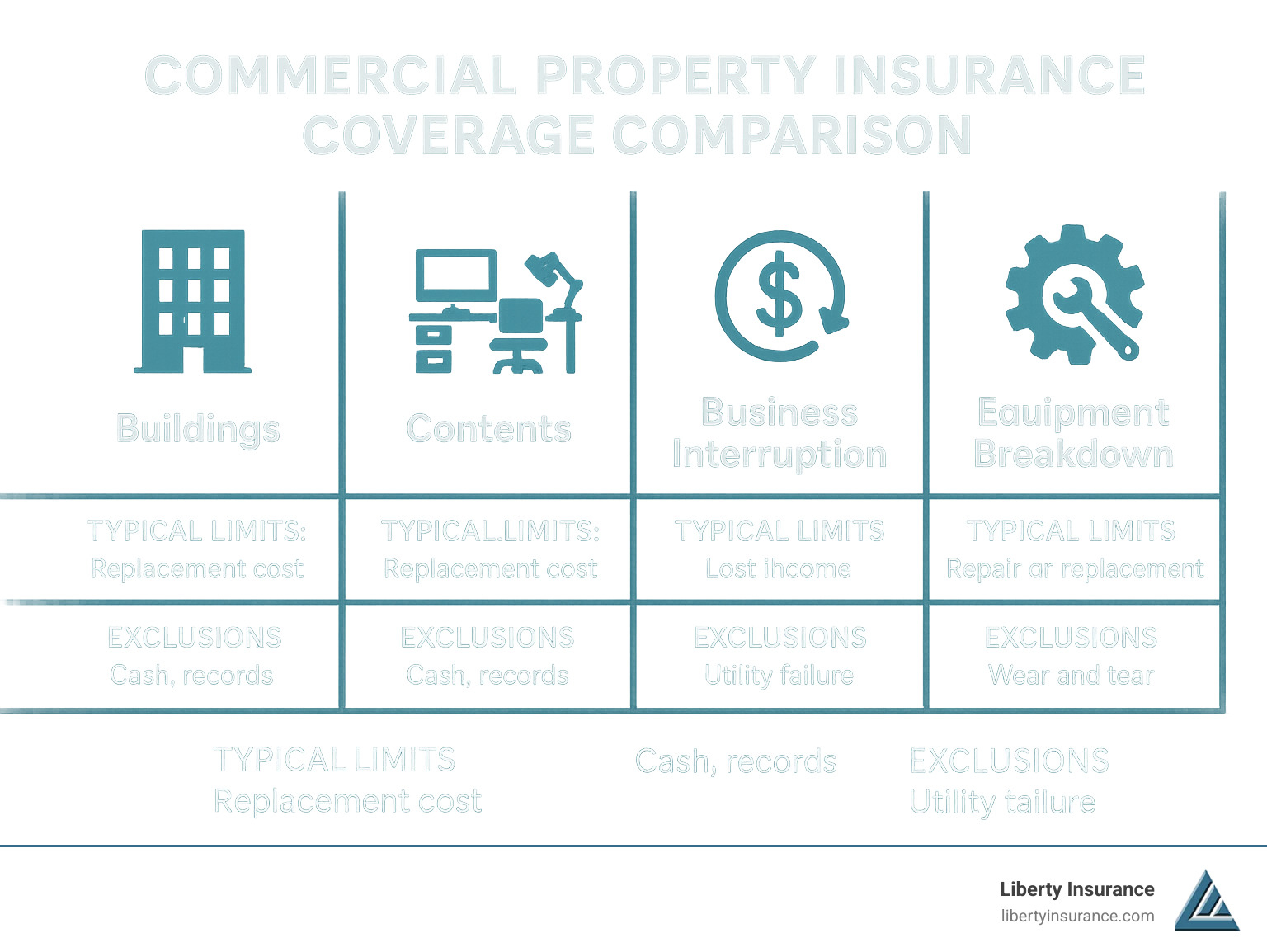
As we’ve explored, the world of small business insurance is vast and filled with options tailored to protect your unique needs. By understanding the different types of insurance, comparing providers, and selecting the right plan, you can safeguard your business against unexpected setbacks.
Remember, insurance isn’t just a regulatory requirement; it’s a strategic investment in your company’s future. So, take the time to assess your needs, explore your options, and choose wisely. Your business’s longevity might just depend on it.
Frequently Asked Questions
What are the three main types of commercial insurance small businesses need?
The three main types of commercial insurance that small businesses typically need are General Liability Insurance, Professional Liability Insurance, and Property Insurance.
Why is commercial insurance important for small businesses?
Commercial insurance is crucial for protecting businesses from financial losses due to unforeseen events like accidents, lawsuits, and natural disasters, ensuring business continuity.
How can a small business evaluate the best insurance plan for its needs?
A small business can evaluate the best insurance plan by assessing its coverage needs, comparing quotes from different providers, and considering the specific risks associated with its industry.
What factors influence the cost of business insurance?
Factors that influence the cost of business insurance include the size of the business, the industry it operates in, its location, and the specific coverage needs.
How does technology influence the future of small business insurance?
Technology influences the future of small business insurance by enabling more personalized coverage options, improving risk assessment, and streamlining the claims process.

